
-
NPR's A Martinez speaks with Stacey Vanek Smith, reporter for Bloomberg Businessweek, about the 10-year Treasury yield's brief rise to 5% Monday and how the Federal Reserve might react.
-
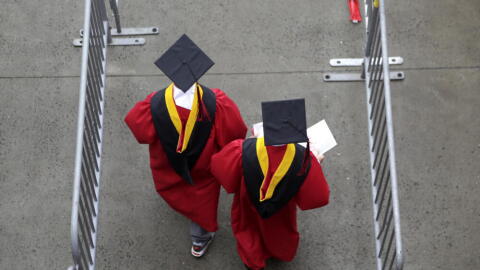 Seth Wenig/APPost-graduation struggles are making some young people question whether college is worth it.


-
A new report shows the cost of living in August was up 3.4% from a year ago. Investors think stubborn inflation makes it more likely that the Federal Reserve will raise interest rates next week.
-
Why is the grocery store produce aisle filling up with branded fruits and vegetables, like honeycrisp apples and cuties oranges? We watch the effort to make one new — branded — tomato.
-
 Many Iranians lost their jobs because of the war and the U.S. blockade. Now some are even losing their backup jobs as sanctions tighten.
 -
Americans are looking at inflation numbers, the high price of diesel, and rising mortgage rates. What does it all mean for your bottom line?
-
 Why Patagonia might become a new data center hub
 -
 Diesel prices in the U.S. has hit yet another record, soaring past $6 a gallon on average as Washington's war with Iran disrupts the world's flow of fuel
 -
Consumer prices rose 3.4% percent last month from a year ago, the same as it was in July and matching expectations. Gas prices were among the biggest risers.
-
 Realtors around the U.S. are being asked to explain how data centers could affect home values. But a new study shows there is no universal answer.
 -
 A Houthi advance along Yemen's Red Sea coast could help push gas prices up even more as the Iran-backed group also launches attacks on Saudi Arabia's oil facilities.
 -
Energy prices are rising just as the government is about to issue a high-profile inflation report.


