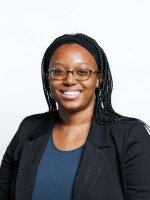
North Carolina is home to more than 100 higher education institutions. They include large research universities, small private liberal arts colleges, HBCUs, single-gender colleges, community colleges, and others.
Some focus on workforce pipeline training, others are attached to enormous healthcare systems, and several promote being a place where students can discover themselves alongside a close-knit academic community.
All the schools face an unprecedented higher education landscape: declines in the number of available traditional college students; shifts in federal support; and rapidly changing advances in technology.
WUNC higher education reporter Brianna Atkinson asked chancellors and presidents across the state five big questions about how they are navigating this environment.
North Carolina Wesleyan University is a small, private school in Rocky Mount. The United Methodist-affiliated university serves about 1,400 undergraduate and graduate students, and is designated by the Department of Education as minority-serving.
More than 40% of students identify as Black, making NC Wesleyan one of the state's few federally-classified predominately Black institutions. It also serves a large population of first-generation, international, and adult learners; as well as students from "economically distressed" areas of central and eastern North Carolina. The university prioritizes mentoring, close faculty relationships, and a "purpose-driven" educational approach. Popular programs include accounting, criminal justice, and psychology.
Evan Duff started as the university's president in 2019, navigating the school out of a $2 million budget deficit. Recent reporting shows NC Wesleyan's budget problems have continued with a reported $3.8 million deficit last year. Federal data shows NC Wesleyan experienced a drop of about 300 students since the pandemic.
Duff has been at NC Wesleyan for a total of 15 years, serving nearly half as president.
What is one important thing happening in higher education and affecting your institution that no one is talking about?
The "demographic cliff" is the headline story, but the quieter shift is that the type of student walking through college doors has fundamentally changed, and most institutions haven't caught up. Nationally, community college and public four-year enrollment grew in fall 2025, while private colleges saw declines, reflecting a growing preference for lower-cost, flexible entry points. At the same time, Gallup's 2026 research shows most enrolled students still believe deeply in the value of their degree. Roughly nine in ten say they're confident it will translate into the job and skills they want.
The disconnect people aren't discussing enough is this: public rhetoric about college's value has soured; only about a third of Americans now call a degree "very important," down sharply over 15 years, even as the students actually in the classroom remain largely convinced it's worth it. That gap between public perception and lived student experience is reshaping recruitment far more than the cliff itself. For a Minority-Serving Institution like North Carolina Wesleyan University, in a region with many working adults and first-generation students, this means our job isn't persuading people that college matters in the abstract; it's proving, individual by individual, that this pathway matters for their specific goals.
If you could make one change to how higher education is viewed in this country what would it be?
We must retire the binary framing that pits "college" against "no college" as a referendum on someone's ambition or intelligence. Survey data shows the country is genuinely split. A 2023 WSJ-NORC poll found 56% of Americans doubted a four-year degree's worth-the-cost proposition, and a 2024 Pew analysis found only 22% believe a degree is worth it if it requires loans, versus 49% who say it's worth it debt-free.
Both camps are missing the real variable: the individual student. A four-year degree, a two-year credential, an apprenticeship, and direct workforce entry are not competing philosophies; they're different tools suited to different career aspirations, financial situations, and levels of readiness. I'd want the public conversation to shift from "is college worth it" to "which pathway fits this specific young person's goals, maturity, and circumstances right now," with the humility to recognize that can change over time, and that none of these paths is a permanent, irreversible choice.

What is college for?
College is for students who have identified, or are actively discovering, a career direction, a body of knowledge, or a credential that requires sustained, structured, in-depth learning, and who are ready for the independence, critical thinking, and social maturity that four years of that experience demands. That's genuinely different from what a two-year technical program, an apprenticeship, or direct work placement is for, and it should be.
Notably, national data shows community colleges and public four-year schools grew enrollment even as private four-year schools saw softness, which tells me students are increasingly sorting themselves toward the pathway that fits their specific circumstances rather than defaulting to a single "right" track. At a small university like ours, college is specifically for the student who benefits from close faculty relationships, practical learning exercises, and a personalized, purpose-driven approach to figuring out not just what they'll do for a living, but who they want to become as a person and citizen, including those weighing graduate school down the road.
What's something on your campus that's giving you hope and how do you envision your institution will look in the next 5-10 years?
What gives me hope is seeing how many different kinds of students are finding a fit here, including traditional 18-year-olds, working adults, community college transfers, and international scholars, because we've built multiple on-ramps rather than one narrow lane. Our new Adult and Professional Studies expansion now offers ten flexible degree pathways (from RN-to-BSN nursing to supply chain management) specifically for working adults balancing jobs and family, plus stackable certificates that count toward a future degree if a student later decides to go further. Our Wesleyan Works program guarantees admission and maximizes transfer credit for community college graduates. Our new COMPASS Center is redesigning how traditional students get career-ready, purpose-driven mentoring from day one.
In five to ten years, I envision NC Wesleyan University as the definitive "any door works" institution for central and eastern North Carolina; a place where a high schooler, a returning adult learner, and a community college transfer student can each find the exact pathway that matches their career goals and readiness, without any of them being told there's only one "right" way to get there.
You've spent your career in senior administrative positions at private Christian universities in North Carolina. The past 15 have been at NC Wesleyan. How does having such a long history at one institution shape how you run it?
Fifteen years at NC Wesleyan, following a career across private and public learning organizations in North Carolina, means I've watched multiple enrollment cycles, funding environments, and generations of student needs evolve. This has taught me that durable institutions succeed by expanding pathways and partnerships rather than defending a single model. That long view is part of why we've built out adult, graduate, community-college-transfer, and international student tracks alongside our traditional undergraduate program, rather than treating any one of them as the "real" or only mission. It also means the decisions I make aren't reactive to a single bad enrollment year or a single flashy trend; they're grounded in institutional memory of what's actually served these specific student populations, many of whom come from economically distressed areas of central and eastern North Carolina.
Longevity in one place builds the trust needed to make hard, sometimes unpopular changes because faculty, staff, and the community know those changes come from continuity of purpose built from collaboration and data, not a fleeting strategy.
This is part four of a multi-part series on the state and future of higher education. Next up is Winston-Salem State University Chancellor Bonita Brown. All of the stories can be accessed here.
WUNC partners with Open Campus on higher education coverage.