Public Radio for the Piedmont and High Country
Play Live Radio
Next Up:
0:00
0:00
0:00 0:00
Available On Air Stations
WFDD 80 Years

1946 – 2026

80 Years
of WFDD

The voice of the Piedmont Triad — and beyond


The 1940s
Photo placeholder — 1946

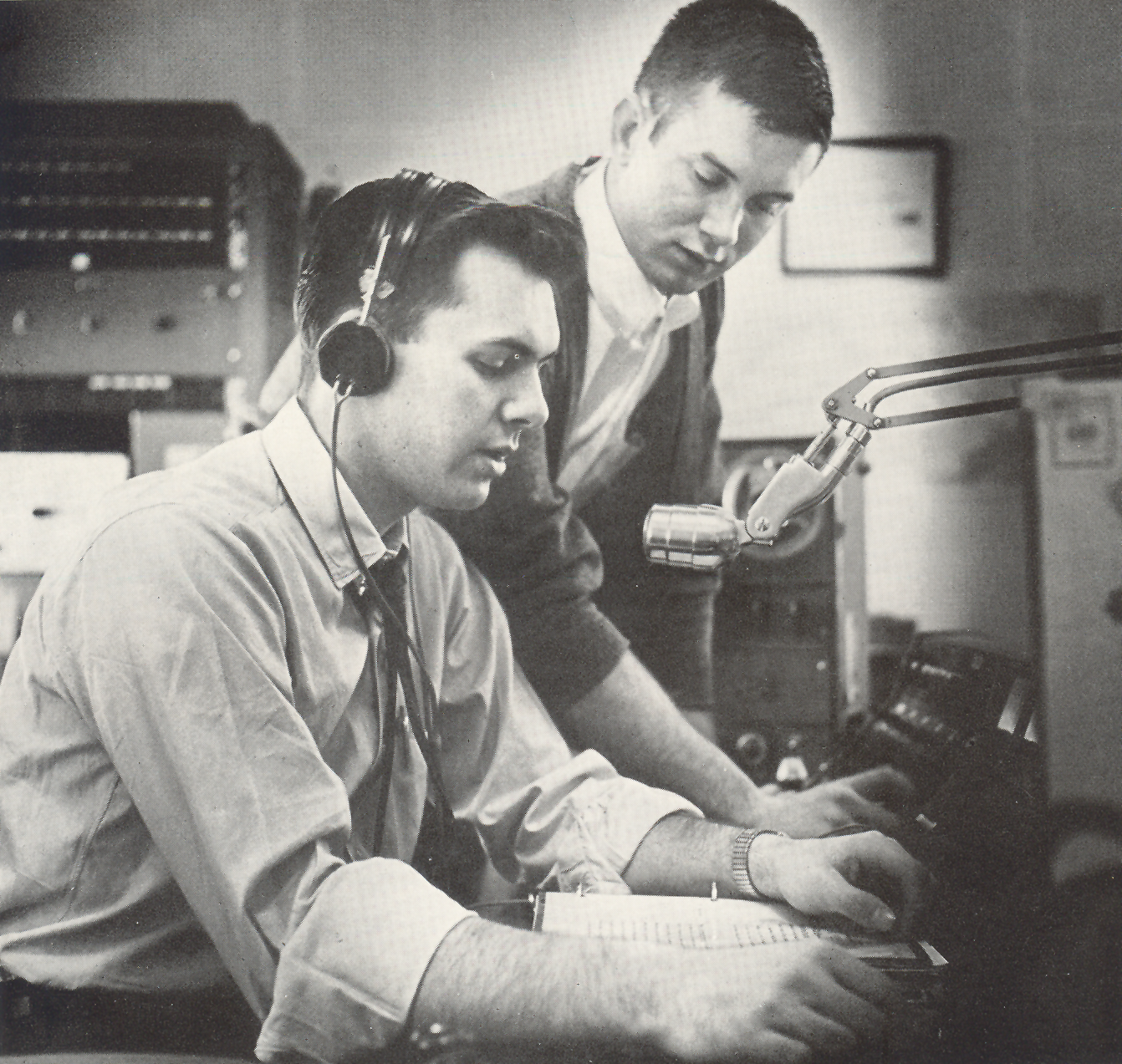
On the old Wake Forest College campus, students Alva "Al" Parris and Henry "Randy" Randall began illegal 5-watt radio broadcasts from a room rented from the College Librarian. A seed was planted.

Photo placeholder — 1948

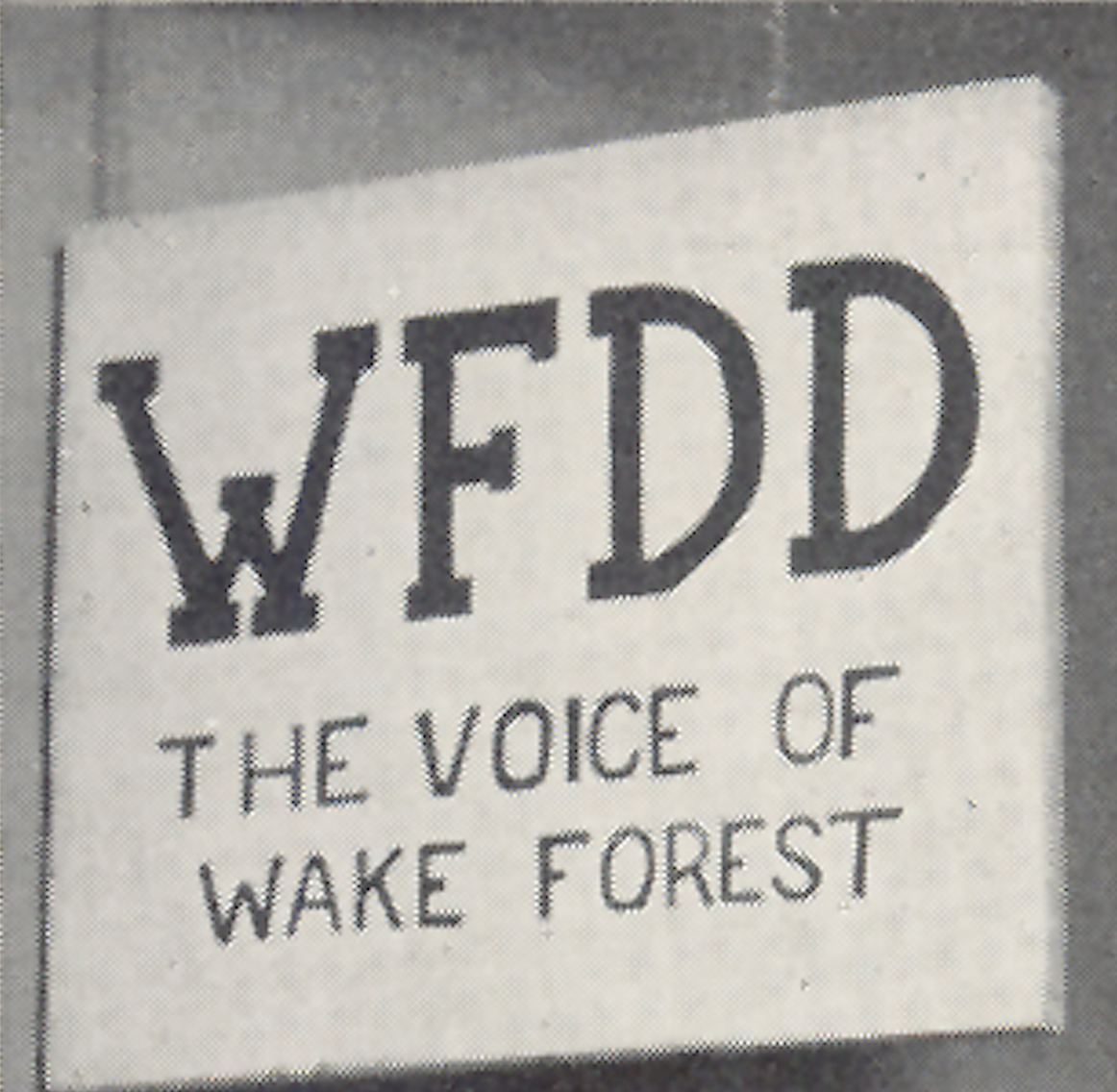
With $200 raised by students, WAKE received an FCC license and officially took to the air on April 19 — broadcasting five hours a day as "the voice of Wake Forest College." Within a month, the station adopted the call letters WFDD, honoring the Wake Forest Demon Deacons.

The 1950s
Photo placeholder — 1956

Wake Forest College relocated to Winston-Salem, and WFDD followed — settling into the newly constructed Reynolda Hall.

Photo placeholder — 1958

Dr. Julian Burroughs, a former student station manager, returned to WFDD as its first non-student Station Manager — serving as faculty adviser until 1981.

The 1960s
Photo placeholder — 1961

The FCC granted WFDD an educational, non-commercial FM license at 10 watts, broadcasting through an antenna atop Reynolda Hall.

Photo placeholder — 1967

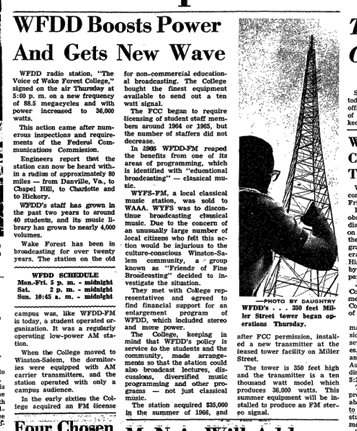
WFDD became Winston-Salem's first FM stereo station, expanding to 36,000 watts and broadcasting 365 days a year. Reception reports arrived from as far as Burlington, Asheboro, and even Chatham, Virginia.

The 1970s
Photo placeholder — 1970

WFDD became a charter member of National Public Radio — the first NPR station in North Carolina, and the only one between Richmond, Virginia, and Tallahassee, Florida.

Photo placeholder — 1971

WFDD carried NPR's inaugural transmission — a live Senate hearing on the Vietnam War — on April 20. Two weeks later, on May 3, NPR's All Things Considered premiered, and WFDD was there live.

Photo placeholder — 1976

WFDD expanded broadcasts to 18 hours per day and grew its staff to five full-time employees.

Photo placeholder — 1977

Listeners pledged $35,000 during WFDD's very first fund drive — proof that the community believed in public radio.

Photo placeholder — 1979

To make room for NPR's new Morning Edition, WFDD retired its student-produced morning program, Renaissance — marking a shift toward national public radio programming.

The 1980s
Photo placeholder — 1981

Deaconlight, the beloved late-night music program born as Deaconlight Serenade in 1946, aired its final broadcast on December 27 — ending 35 years of student-driven programming. That same year, Pat Crawford became WFDD's first full-time General Manager.

Photo placeholder — 1982

Under new General Manager Cleve Callison, WFDD's transmission power was increased to 100,000 watts — reaching more listeners than ever before.

Photo placeholder — 1989

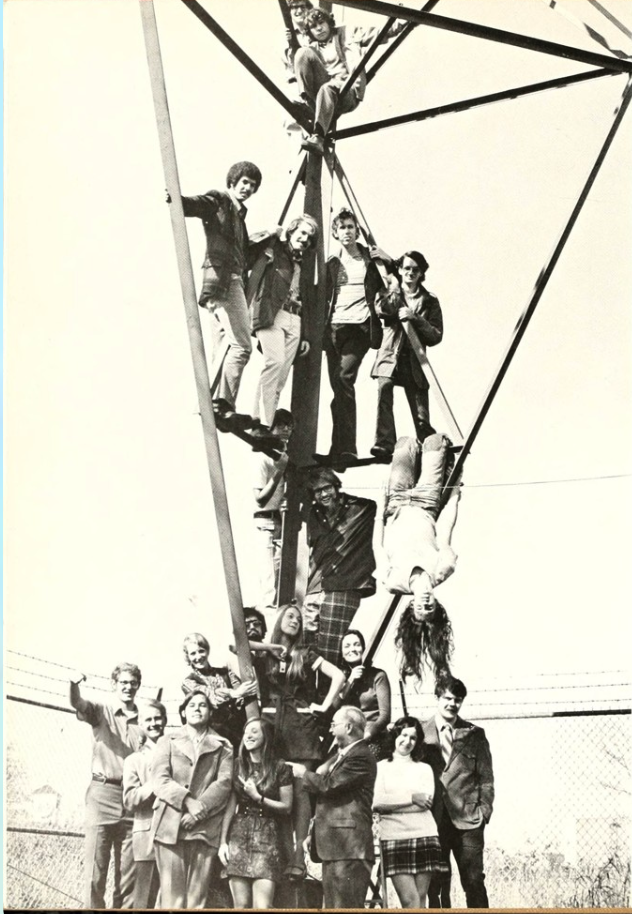
On May 5, a powerful storm toppled WFDD's Miller Street tower, causing $56,000 in damage. The station went silent briefly, then returned at 50 watts — slowly climbing back to 20,000 watts by year's end.

The 1990s
Photo placeholder — 1991

Funded by a listener-supported Tower and Studio Fund, WFDD moved into the historic ca. 1890 Weatherly House — renovated to include state-of-the-art production and broadcast facilities.

The 2000s
Photo placeholder — 2005

WFDD shifted to a News & Information format, adding several nationally distributed programs including The Diane Rehm Show, which quickly became a listener favorite.

Photo placeholder — 2007

WFDD expanded into HD radio, simultaneously delivering News/Talk, Classical Music, and Folk programming across three digital channels — 24 hours a day, every day of the year.

Photo placeholder — 2009

WFDD launched its first BackPack Campaign with Second Harvest Food Bank: every gift to WFDD filled a backpack of food for a child facing hunger. The inaugural drive filled 300 backpacks. By 2019, that number had grown to 1,300 each December.

The 2010s
Photo placeholder — 2010

WFDD launched Radio Camp, a week-long summer day camp for middle schoolers, followed the next year by Radio 101 for high school students. By decade's end, these programs — housed under the Hive education initiative — were reaching more than 200 students annually.

Photo placeholder — 2014

Neal Charnoff joined WFDD as Morning Edition host. His friendly delivery and daily plea for turn signal usage quickly became a listener institution — eventually landing on bumper stickers and a listener-designed t-shirt.

Photo placeholder — 2016

A major newsroom expansion marked WFDD's decisive turn toward local journalism. The station adopted a beat structure and launched Carolina Curious, its listener-driven reporting feature.

Photo placeholder — 2017

WFDD shifted its event strategy inward — producing its own highly engaging experiences, from summer bar meetups and quarterly Book Club gatherings to Look Up and Listen and evenings with national talent. Smaller team, bigger creativity.

Photo placeholder — 2018

WFDD earned a National Edward R. Murrow Award for Excellence in Innovation for a Community Conversation event on mental health care access — a topic chosen entirely by the community through open submissions and a public vote.

The 2020s
Photo placeholder — 2020

Over a single weekend, WFDD converted entirely to a remote operation — and never missed a beat. The team launched a bilingual COVID-19 blog and hub, and produced 500 more news stories that year than the year before.

Photo placeholder — 2024

Hurricane Helene devastated much of WFDD's High Country listening area and knocked out power to the Boone transmitter for [X] days. For many impacted communities, WFDD was the only source of news in the immediate aftermath. [Details about hardening efforts TK.]

A year of change and resolve. Robin Lambert joined as morning host as Neal Charnoff moved to All Things Considered. WFDD debuted Spring Fling, a celebration of local musicians. Federal funding for CPB was rescinded — and listeners responded with record-breaking support.